China Best Long LED Light Manufacturer for Global Buyers?
Can China provide the best Long LED Light for global buyers? The answer depends on evidence, not factory size or attractive catalog images. Lighting represents nearly 15% of global electricity consumption, according to the International Energy Agency. Efficient LED adoption therefore affects operating costs, carbon performance, and long-term infrastructure planning.
The U.S. Department of Energy reports that modern solid-state lighting continues improving in efficacy, reliability, controls, and thermal management. These factors matter for long linear fixtures used in warehouses, workshops, retail aisles, and public facilities. A dependable China Long LED Light manufacturer should provide LM-80 and TM-21 data, photometric files, thermal test results, and consistent binning records. IEC-compliant designs, responsible material declarations, and clear warranty terms also deserve attention. Numbers alone are not enough.
Dr. Nadarajah Narendran, a respected LED lighting researcher, has stated, “The quality of light is just as important as the quantity of light.” That principle is easy to forget. A bright fixture may still create glare, uneven illumination, or uncomfortable color shifts. Buyers should inspect samples under real ceiling heights, not only review laboratory charts. Long LED Light products should also demonstrate stable performance after extended operation. Independent testing strengthens confidence, although it cannot eliminate every supply-chain risk. China offers strong manufacturing depth, but “best” remains a buyer-specific conclusion. Price, efficiency, optical control, service response, and documented quality must be compared together. Some manufacturers still present incomplete evidence. That weakness deserves honest scrutiny.
What Defines a Long LED Light Manufacturer in China?
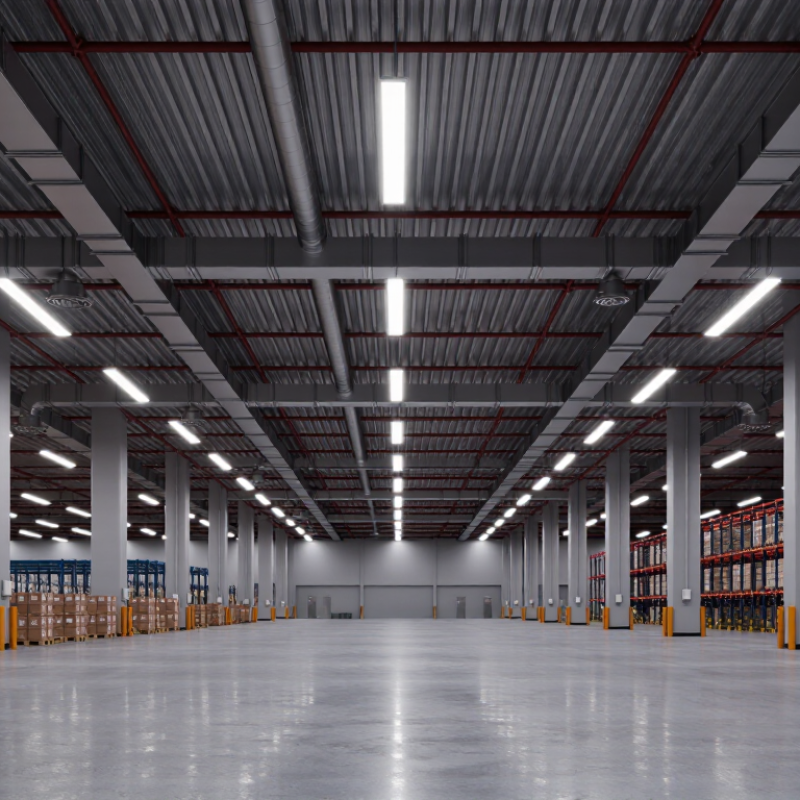
A long LED light manufacturer in China is defined by more than production capacity. The real test is whether the factory can control performance across extended fixture lengths. Long housings may suffer from voltage drop, uneven brightness, heat buildup, and difficult installation. Experienced manufacturers address these risks during design, not after delivery.
A capable engineering team checks aluminum profiles, PCB layout, driver matching, and diffuser quality together. It should provide photometric data, color consistency results, thermal test records, and clear product tolerances. Ask how the factory tests a five-meter or ten-meter assembly. A sample that looks good for one hour proves very little. Continuous testing exposes weak connections and unstable drivers.
Reliable production also depends on traceability. Each batch should link to component records, inspection results, and aging-test reports. Export experience matters, but communication matters more. Drawings must be confirmed in writing, including mounting points, cable exits, dimming methods, and operating temperatures. Small details become expensive problems.
No factory is perfect. Some manufacturers may rely too heavily on standard samples, while project conditions differ. A serious supplier admits these limits and proposes corrective tests. Factory visits, independent inspections, and staged approvals can reduce uncertainty. The strongest partner combines practical installation knowledge with documented quality control, rather than promising the lowest price or the brightest specification.
Key Product Types and Technical Specifications
China Best Long LED Light Manufacturer for Global Buyers?
Key Product Types and Technical Specifications
Long LED lighting includes linear fixtures, LED tubes, continuous-row systems, and high-bay luminaires. Each type serves a different installation condition. Linear fixtures suit offices, warehouses, and retail aisles. Tubes fit retrofit projects with existing sockets. High-bay models handle ceilings above six meters. Continuous-row systems reduce dark gaps between luminaires.
Technical selection should start with measured performance, not housing appearance. Commercial efficacy commonly ranges from 120 to 190 lumens per watt, depending on optics and temperature. The U.S. Department of Energy identifies efficacy, thermal control, and lifetime as core solid-state lighting factors. Buyers should request LM-80 and TM-21 data, not only an advertised 50,000-hour claim. That number can mislead without temperature conditions.
Choose 4000K for warehouses, 5000K for inspection areas, and 3000K for warmer interiors. A CRI above 80 supports general work, while CRI 90 improves color inspection. Check IP ratings, surge protection, power factor above 0.90, and total harmonic distortion. Dimming options may include 0-10V, DALI, or motion control. The International Energy Agency reports that lighting uses about 15% of global electricity, so efficient controls matter. In practice, a cooler warehouse roof can extend driver life, but installation mistakes still happen. Poor spacing creates glare, even with excellent efficacy.
Manufacturing Standards and Quality Control Practices
China Best Long LED Light Manufacturer for Global Buyers?
Manufacturing Standards and Quality Control Practices
A reliable long LED light manufacturer treats quality as a daily process, not a sales promise. Production should follow documented procedures aligned with ISO 9001 principles. Electrical safety, electromagnetic compatibility, and material restrictions also require careful review. Requirements may differ by destination market. Buyers should request current test reports and certification records.
Quality control begins with incoming materials. Inspectors check LED boards, aluminum housings, drivers, lenses, and wiring before assembly. A simple sample check is not enough. Key measurements include color temperature, power consumption, insulation resistance, and light output. During assembly, workers verify solder joints, connector placement, and sealing details. A loose terminal can create failures months later.
Testing must continue after production. Burn-in testing can expose unstable drivers and uneven brightness. Temperature testing helps assess performance inside enclosed spaces. Packaging inspections matter too. Long fixtures can suffer damage at the corners during transport. Careful foam placement reduces that risk. Still, no inspection system is flawless. A rushed shift may miss a small scratch or weak solder point. Experienced manufacturers review complaints, trace batch numbers, and adjust procedures instead of hiding defects. Buyers should visit the facility when possible, observe testing directly, and compare documented results with delivered samples.
How Global Buyers Can Evaluate Chinese LED Suppliers
Global buyers should evaluate Chinese LED suppliers through evidence, not polished catalogs. Request a working sample and inspect its beam pattern, color consistency, heat management, and driver performance. Ask for photometric files, safety certifications, test reports, and clear product specifications. A reliable supplier explains test methods instead of sending unexplained documents.
Communication is also a technical factor. Send a written requirement covering voltage, length, lumen output, color temperature, beam angle, IP rating, quantity, packaging, and delivery location. Compare the sample with the quotation. Small differences matter. Warranty terms should define coverage, response time, replacement procedures, and exclusions. Payment protection and traceable shipment records also reduce avoidable risk.
Be careful with unusually low prices. They may reflect weaker drivers, thinner housing, or incomplete testing. I have seen attractive samples fail after extended heat exposure, so short demonstrations are not enough. Still, no evaluation is perfect. Buyers should document decisions, retain test samples, and reassess suppliers after each shipment. Supplier relationships need verification, not blind trust.
Export Services, Customization, and International Compliance
China Best Long LED Light Manufacturer for Global Buyers?
For global buyers, export service matters as much as LED performance. The International Energy Agency reports that lighting uses about 15% of global electricity. Therefore, efficient long LED fixtures can support measurable energy savings in warehouses, offices, and retail spaces. A capable manufacturer should provide photometric files, lumen-maintenance data, driver details, and samples before mass production. Custom options may include length, wattage, color temperature, beam angle, emergency function, and DALI control. Clear documentation reduces costly misunderstandings between design teams and factories.
International compliance requires more than a printed certificate. Depending on the destination, buyers may need CE, RoHS, EMC, CB, or local safety approvals. IEC 60598-1 supports general luminaire safety requirements, while IEC 62471 evaluates photobiological safety. The U.S. Department of Energy has also highlighted solid-state lighting’s long-term energy-saving potential in its market forecasts. Still, compliance claims should match the exact model, driver, and production version. A datasheet can hide important differences. Independent laboratory testing is safer than trusting copied documents.
Tips: Request one production sample, not only a prototype. Check connector quality, flicker, heat dissipation, packaging strength, and installation instructions. Ask for test reports with matching model numbers. Confirm voltage, frequency, plug type, warranty terms, Incoterms, and spare-part support in writing. Customization sounds simple. It often is not. A small housing change may affect heat, certification, and delivery time.
China Best Long LED Light Manufacturer for Global Buyers? - Export Services, Customization, and International Compliance
| Evaluation Dimension | Typical Specification or Service Range | What Global Buyers Should Verify | Export and Compliance Relevance |
|---|---|---|---|
| LED Service Life | Common rated life: 30,000–100,000 hours, depending on LED package, driver quality, thermal design, and operating conditions. | Request LM-80 data for LED components, TM-21 projections where applicable, and an L70 or L80 maintenance-life declaration. | A documented lifetime supports project approvals, maintenance planning, and warranty evaluation. |
| Luminous Efficacy | Typical modern LED luminaires: approximately 100–180 lm/W at product level, subject to optic, driver, power, and thermal conditions. | Compare tested luminaire output rather than LED-chip efficiency alone; confirm input wattage, delivered lumens, and test conditions. | Higher efficacy can reduce energy consumption and operating cost in commercial, industrial, and outdoor installations. |
| Color Temperature | Common options include 2700K, 3000K, 4000K, 5000K, and 6500K; tunable-white versions may provide a wider adjustable range. | Confirm CCT tolerance, chromaticity consistency, binning method, and whether the requested CCT is available in production quantities. | CCT selection may be influenced by local lighting regulations, application requirements, and customer preferences. |
| Color Rendering | CRI ≥80 is widely used for general lighting; CRI ≥90 is commonly selected for retail, hospitality, residential, and display applications. | Ask for test results identifying Ra and, when needed, R9 values for saturated red-color rendering. | Verified color performance helps satisfy project specifications and reduce visible color differences between batches. |
| Ingress Protection | IP20 is suitable for many dry indoor locations; IP65 provides dust-tight protection and protection against water jets; IP66 provides protection against powerful water jets. | Confirm the complete assembled luminaire rating, sealing method, cable glands, connectors, and test report according to IEC 60529. | The correct IP rating is important for outdoor, warehouse, parking, factory, and humid-area installations. |
| Mechanical Protection | IK08 and IK10 are common impact-protection levels for robust indoor and outdoor luminaires, subject to product design. | Check the IK test method, housing material, diffuser construction, and whether the rating applies to the complete product. | Impact resistance can be relevant for public areas, sports facilities, transport spaces, and industrial environments. |
| Input Voltage and Frequency | Common international configurations include 100–277V AC, 120–277V AC, or 220–240V AC at 50/60Hz, depending on the driver. | Confirm nominal voltage, allowable voltage range, frequency, surge protection, power factor, and total harmonic distortion. | Correct electrical configuration reduces installation risk across different destination markets. |
| Customization Options | Possible options include wattage, length, housing color, optics, CCT, CRI, dimming, emergency backup, sensors, connectors, mounting brackets, and packaging. | Request drawings, samples, approved bills of materials, photometric files, and a written change-control process. | Documented customization helps maintain consistency between samples, mass production, and replacement orders. |
| Dimming and Controls | Common control methods include 0–10V, DALI, PWM, phase-cut dimming, occupancy sensors, daylight sensors, and selected wireless control systems. | Verify controller compatibility, dimming range, minimum load, flicker behavior, wiring requirements, and control-system testing. | Control compatibility is essential for smart-building projects and energy-management systems. |
| International Safety Standards | Relevant product standards may include IEC 60598-1 and the applicable IEC 60598-2 part for the luminaire type. | Confirm the exact standard edition, test scope, laboratory qualifications, and whether the report covers the final production configuration. | Correct standards documentation supports technical files, importer review, and market-entry assessments. |
| EMC and Photobiological Safety | Depending on the destination market, assessment may involve EN 55015, EN 61547, EN 61000-3-2, EN 61000-3-3, and EN 62471 or equivalent requirements. | Request EMC test reports, flicker information where required, and photobiological-risk assessment for the final optical configuration. | These assessments address electromagnetic emissions, immunity, power-quality behavior, and optical safety. |
| Restricted Substances | Products entering applicable markets may need to meet RoHS requirements, including limits for restricted substances specified by the relevant legislation. | Obtain a current declaration of conformity, material declarations, and supporting supplier documentation. | Material compliance can affect customs clearance, customer audits, and legal market placement. |
| Quality Control Process | A robust process may include incoming-material inspection, in-process checks, aging tests, electrical safety tests, photometric verification, and final inspection. | Ask for inspection plans, sampling levels, calibration records, corrective-action procedures, and batch traceability. | Traceable quality records reduce failure risk and simplify dispute resolution for international shipments. |
| Packaging and Labeling | Export packaging commonly uses protective inserts, moisture control where appropriate, carton marks, product labels, installation instructions, and electrical ratings. | Confirm carton dimensions, gross weight, palletization, barcode requirements, language needs, and drop-test expectations. | Proper packaging supports safe transport, warehouse handling, and destination-market labeling requirements. |
| Shipping Documentation | Typical documents include commercial invoice, packing list, transport document, certificate of origin when required, product specification, and compliance documents. | Confirm document accuracy, HS-code responsibility, Incoterms® rule, export packaging, and destination customs requirements. | Complete documentation helps prevent customs delays and supports accurate landed-cost calculations. |
| Warranty and After-Sales Support | Commercial LED lighting warranties commonly range from 3 to 5 years, subject to product type, operating conditions, and written warranty terms. | Review exclusions, claim procedures, replacement policy, operating-temperature limits, installation conditions, and spare-part availability. | Clear warranty terms are especially important when products are installed across multiple countries. |
| Pre-Shipment Verification | Recommended checks include quantity, model number, CCT, wattage, dimensions, accessories, labels, packaging condition, and sample-based electrical or functional testing. | Use an agreed inspection checklist and acceptance criteria before shipment; independent inspection can be considered for high-value orders. | Pre-shipment verification helps ensure that delivered goods match the approved sample and purchase specification. |
Note: Specification ranges are representative industry values, not guarantees for every product. Final performance, certification, labeling, and import requirements should be verified for the selected model and destination market.
Related Posts
-
How to Choose the Best LED UFO High Bay Light?
-
China's Top-Grade Factories: Delivering Unmatched Best LED Shop Lights for Global Buyers
-
How to Choose the Right Led Linear Lighting for Your Space
-
2026 How to Choose the Best High Bay Lights for Your Space?
-
What is High Bay Led Lights and How Do They Work?
-
Unlocking Energy Efficiency in Warehouses with Best Commercial Led Lighting Solutions