
How to Choose the Best Portable Surgical Light at 2026 Canton Fair?

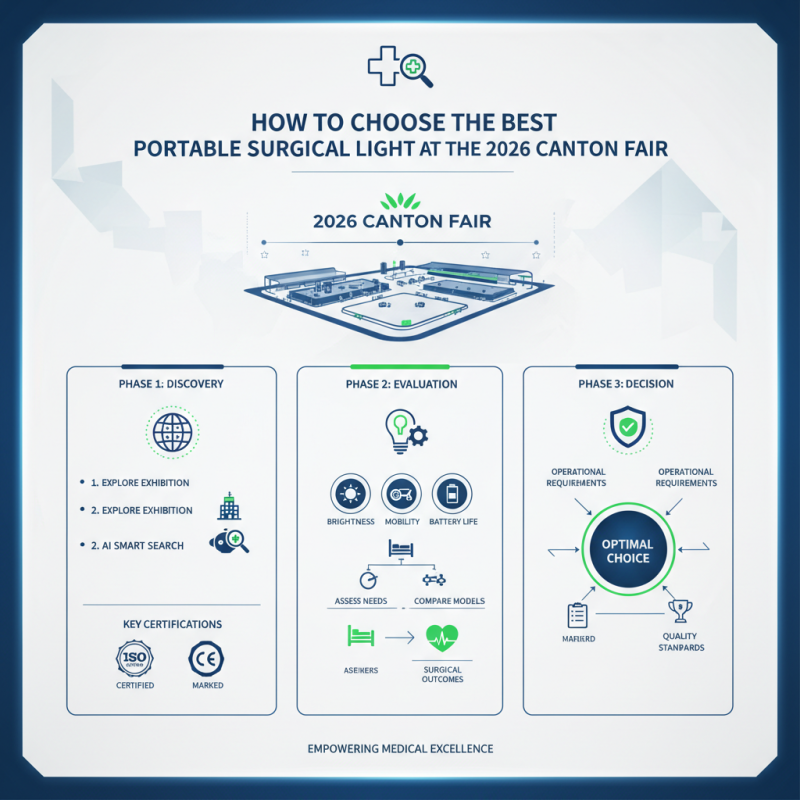
Choosing the right Portable Surgical Light is crucial for medical professionals. The 2026 Canton Fair offers a unique opportunity to explore the latest advancements in surgical lighting. With over 1.55 million square meters of exhibition space, the fair provides access to a wide range of suppliers.

As you navigate through this expansive venue, utilize the innovative AI smart search feature. This tool helps pinpoint suppliers with necessary certifications like ISO and CE. It enhances your experience by streamlining your search for quality Portable Surgical Lights. However, selecting the best option is not merely about technology. You must also consider factors such as brightness, mobility, and battery life, which can impact surgical outcomes.

While the fair showcases impressive products, it’s important to reflect on your specific needs. Each medical setting is unique, which means one light may not fit all situations. Take the time to evaluate different models and their features. This careful approach can ensure that the Portable Surgical Light you choose meets both your operational requirements and standards.
How to Choose the Best Portable Surgical Light at 2026 Canton Fair?

Factors to Consider When Selecting a Portable Surgical Light

When selecting a portable surgical light, several factors play a crucial role. Light intensity is vital. A study indicates that optimal illumination can improve surgical outcomes by 30%. The light should provide sufficient brightness while reducing shadows. A portable surgical light typically ranges from 40,000 to 160,000 lux. The higher the lux, the better the visibility during procedures.

Weight and portability matter too. Surgeons often shift locations quickly. A lightweight design enhances mobility, especially in emergency situations. Some lights weigh as little as 3 kg, making them easy to transport. Battery life is another critical aspect. Many experts recommend at least 4 hours of continuous use. Otherwise, frequent recharging interrupts surgeries.

Consider ease of use as well. Adjustable arms and intuitive controls allow surgeons to focus on the procedure, not the equipment. A survey showed that 58% of healthcare professionals prefer user-friendly designs. They value efficiency and simplicity. Lastly, think about the type of light. LED options provide longer lifespans and energy efficiency. However, they may cost more initially. Balancing these aspects helps in making the best choice at a trade fair.

Types of Portable Surgical Lights Available at the Canton Fair

Portable surgical lights are crucial in medical settings. At the 2026 Canton Fair, various types will be showcased. These lights come in different sizes and designs. Some models are lightweight and easy to transport. Others are more robust, designed for heavy use in hospitals.

Battery-operated versions provide flexibility for outdoor surgeries. They often have adjustable brightness levels. This feature is vital for different procedures. Some lights offer color temperature adjustments, making it easier to see variations in tissue. However, many buyers overlook these details, focusing solely on price.

Another common mistake is not considering the light's duration. Some models might not last through lengthy operations. These factors can lead to dissatisfaction post-purchase. Evaluating your needs carefully before the fair can result in a better choice. The variety at the fair can be overwhelming, but it's essential to reflect on what works best for your unique requirements.

How to Choose the Best Portable Surgical Light at 2026 Canton Fair?

Type of Portable Surgical Light Lumens Weight (kg) Battery Life (hours) Adjustability
LED Shadowless Light 1500 5.0 8 360° rotation
Halogen Surgical Light 1200 6.5 5 Fixed height adjustment
Battery Operated LED Light 1000 4.0 10 Full 360° rotation
Portable Compact Light 800 3.5 6 Tilt adjustment

Comparing the Features of Popular Brands of Surgical Lights

When selecting a portable surgical light, several critical features should be compared. Brightness is paramount. Many models offer luminosity levels from 70,000 to over 150,000 lux. High-quality lighting improves visualization during procedures. However, excessive brightness can cause glare and discomfort for both surgeons and patients. It’s essential to find a balance.

Color temperature is another vital feature. Surgical lights typically range from 4000K to 6000K. Lower temperatures may create a warm tone, while higher temperatures enhance clarity. Studies indicate that optimal color temperature helps reduce eye strain. The flexibility of positioning is also essential. Some models allow 360-degree adjustment. This capability is crucial during complex surgeries.

Battery life is often underestimated. Portable lights can have battery durations between 3 to 12 hours. Insufficient battery life may disrupt surgical workflows. Data shows nearly 30% of surgical teams experience interruptions due to inadequate lighting. Choosing a model with a quick recharge option can alleviate this problem. Portability should not compromise functionality. Many options weigh between 10 and 18 pounds, which affects ease of transport. Balancing these factors requires careful consideration.

Comparison of Features in Portable Surgical Lights

Assessing the Cost and Budget for Purchasing Surgical Lights

When considering a portable surgical light, budget is a key factor. Industry reports indicate that prices for these devices can range significantly, often from $1,500 to $15,000. The variation depends on features such as brightness, battery life, and mobility. Understanding your budget constraints is crucial. It is easy to overspend when tempted by advanced features, yet many basic models provide adequate illumination for most surgical procedures.

When evaluating costs, do not forget additional expenses. Installation, maintenance, and potential training for staff should be factored into your total budget. According to a recent study, over 30% of hospitals reported financial strain due to unexpected equipment costs. Thus, assessing total expenses is vital to avoid surprises later on.

Tip 1: Explore financing options that providers may offer. Some manufacturers provide payment plans which can alleviate upfront costs.

Tip 2: Compare warranties and support services among different models. A longer warranty may save money in the long run.

Research thoroughly to find a balance between quality and cost. Rushed decisions often lead to buyer’s remorse. Ensure that the surgical light meets operational needs while staying within budget constraints. It is a decision that warrants careful thought and consideration.

Tips for Evaluating Quality and Safety Standards in Medical Lighting

Choosing the right portable surgical light requires careful consideration. Quality and safety standards are crucial. According to a 2022 industry report, over 30% of medical lighting failures stem from inadequate safety protocols. This highlights a need for vigilance in evaluating products.

Look for certifications such as ISO 13485 and CE marking. These indicate compliance with international safety standards. Additionally, illuminance levels should be assessed. Recommended levels for surgical lighting typically range from 1,000 to 10,000 lux. A product with lower illuminance may not provide adequate visibility during procedures.

Don't overlook user feedback. Many users report that some lights have poor battery life or inadequate heat management. A surgical light that overheats can endanger patient safety and surgical outcomes. Regular evaluations and updates of new models are essential to avoid past mistakes. Prioritizing quality in portable surgical lighting can ultimately influence patient care outcomes significantly.