What is High Bay Led Lights and How Do They Work?
High Bay LED Lights represent a crucial advancement in industrial lighting. They are designed for high ceilings and large spaces, like warehouses and manufacturing plants. As John Smith, a senior lighting engineer, notes, "High Bay LED Lights provide efficiency that traditional options simply can't match." This statement reflects a growing trend towards smarter lighting solutions in various industries.
These lights work by utilizing advanced LED technology, which not only enhances visibility but also reduces energy costs. With the shift toward sustainability, businesses are increasingly considering High Bay LED Lights. They offer long-lasting performance, which minimizes maintenance needs. Despite their benefits, some might find the upfront costs intimidating.
However, the investment often pays off through lower electricity bills and reduced replacement frequency. The transition to High Bay LED Lights might seem daunting, yet it can significantly impact both productivity and operational costs. Exploring this technology is essential for any business looking to improve its lighting solutions. Understanding how these lights function will help clarify their value and application in real-world settings.
What Are High Bay LED Lights?
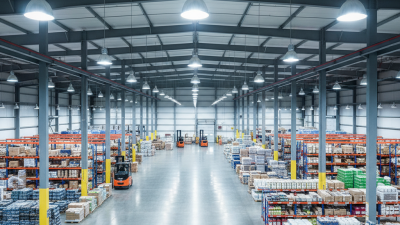
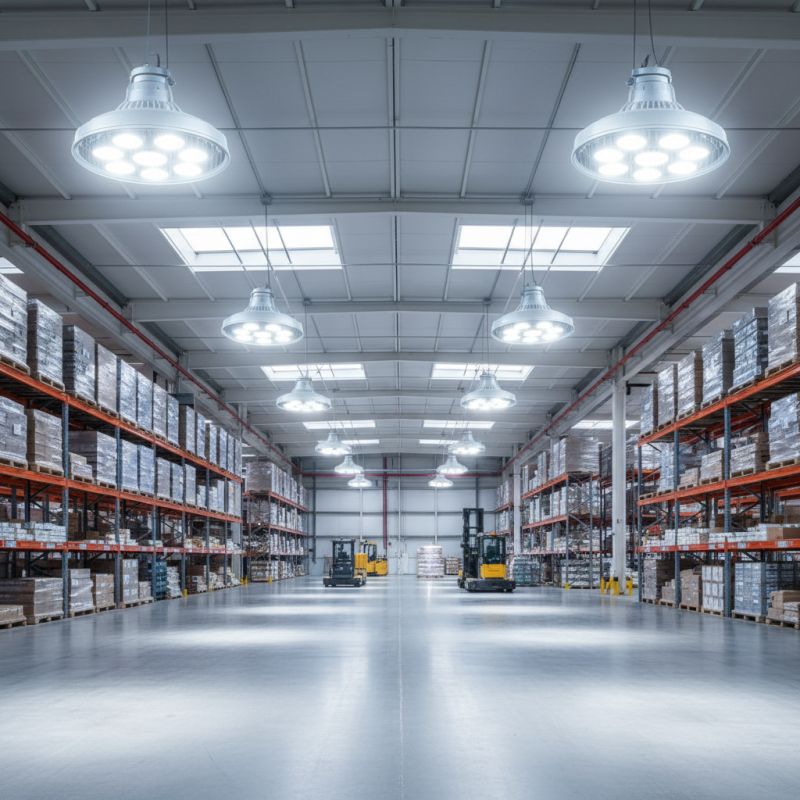
High Bay LED lights are specialized lighting solutions designed for vertical spaces. These lights are often used in warehouses, gymnasiums, and large retail areas. The design allows them to provide focused illumination in high ceilings, typically ranging from 15 to 30 feet. Their unique construction helps distribute light evenly across surfaces, reducing dark spots.
The simple operation of high bay LED lights is impressive. They use Light Emitting Diodes (LED) to convert electrical energy into light. This process is highly efficient, resulting in lower energy consumption compared to traditional lighting methods. Moreover, these lights have a long lifespan, often surpassing 50,000 hours. However, it is crucial to install them correctly for optimal performance.
Despite their strengths, high bay LED lights are not perfect. They can create glare if not positioned properly. Additionally, some users may find the upfront cost to be a barrier. Understanding these aspects can help consumers make informed choices. High bay LED lights hold great promise, yet they require careful consideration in terms of placement and budget.
Key Features and Advantages of High Bay LED Lights
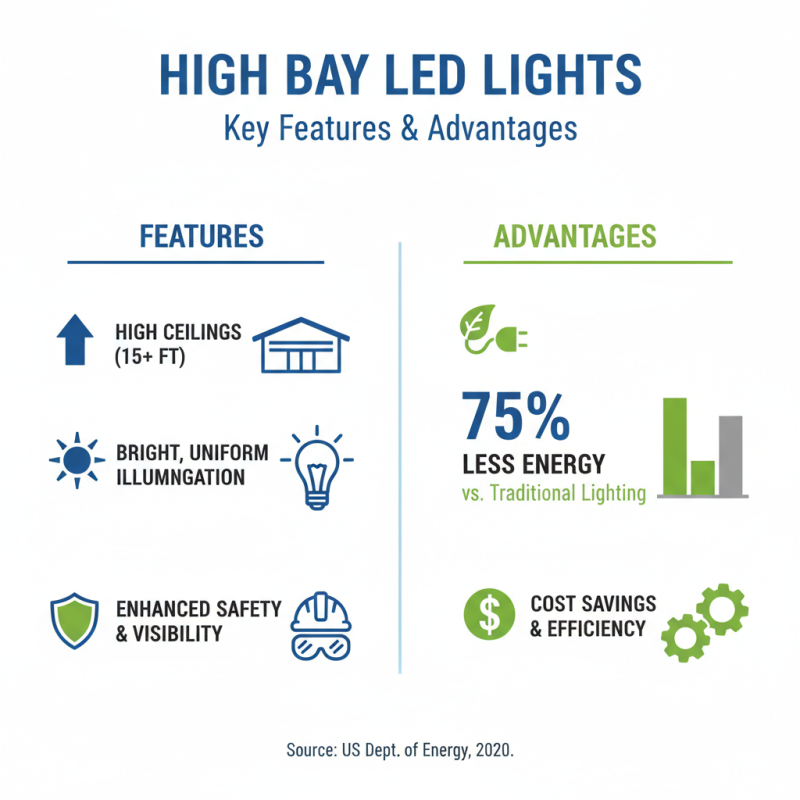
High bay LED lights are an essential lighting solution for large spaces. They are specifically designed for high ceilings, typically over 15 feet. These lights provide bright illumination that enhances visibility and improves safety in warehouses, gymnasiums, and manufacturing facilities. According to a 2020 report by the U.S. Department of Energy, LED lights use about 75% less energy than traditional lighting options. This statistic highlights the efficiency of high bay LEDs.
The features of high bay LED lights include durability and low maintenance. They can last up to 50,000 hours, reducing replacement frequency. This longevity translates to fewer maintenance costs. Additionally, they are often equipped with effective heat dissipation systems, which prevent overheating. However, some users have reported issues with light uniformity. If not installed correctly, some areas may become overly bright while others are dim.
Another major advantage of high bay LEDs is their environmental benefit. They contain no harmful substances like mercury. Thus, they are safer for both users and the environment. The rapid advancement of LED technology means these lights are becoming more affordable. Despite some initial costs, 60% of facility managers expect significant long-term savings. Yet, balancing installation costs with budget constraints remains a challenge many face.
How High Bay LED Lights Function Mechanically
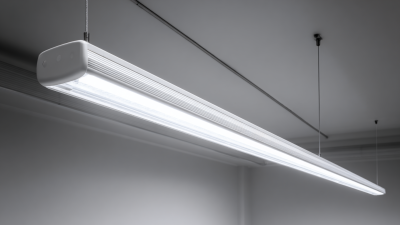
High bay LED lights are designed for use in large spaces with high ceilings. They typically work by utilizing advanced LED technology to produce bright, efficient lighting. The key to their effectiveness lies in their mechanical function. High bay lights often have a reflector or lens that helps distribute light evenly across the area. This feature ensures that even the farthest corners of the space receive adequate illumination.
The heat management system is another crucial aspect. High bay LED lights have integrated heat sinks that dissipate heat effectively. This prolongs the lifespan of the LEDs and maintains their brightness. Interestingly, some designs utilize a modular approach, allowing for easy maintenance or replacement of individual components. However, the arrangement of fixtures can be tricky, affecting overall light distribution.
One challenge in using high bay LED lights is ensuring the correct placement and angle. If not positioned properly, some areas may remain dim. This can lead to shadows, which could pose safety hazards. Users must also consider the wattage and lumen output to match the requirements of their space. Understanding these mechanical functions allows for better decision-making when selecting high bay LED solutions.
Applications of High Bay LED Lights in Various Industries
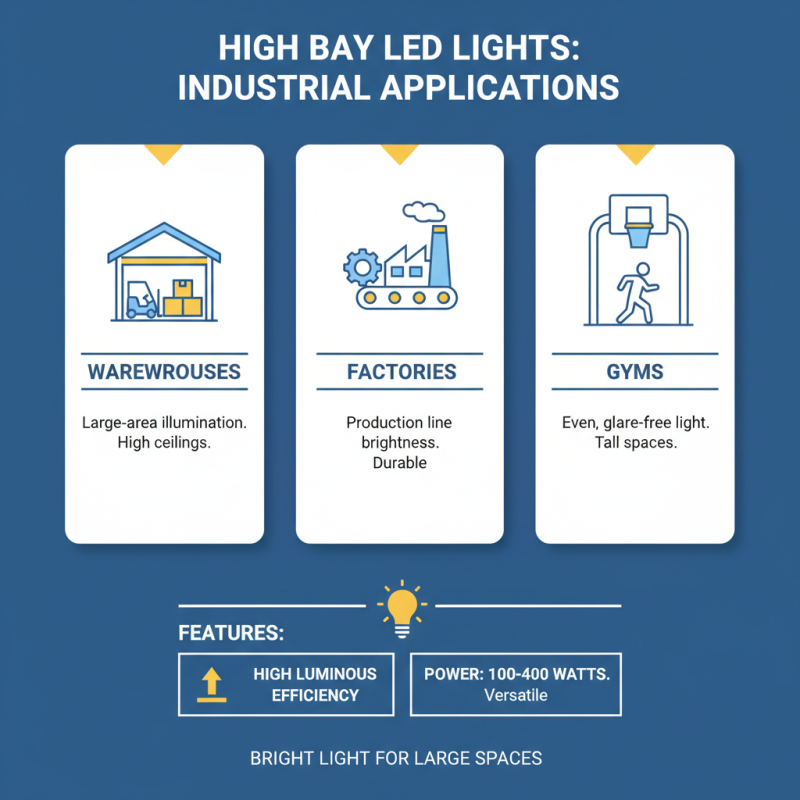
High bay LED lights are designed for large spaces. These fixtures provide bright lighting for warehouses, factories, and gyms. Their high luminous efficiency makes them ideal for high ceilings. Typically, they have a power rating between 100 to 400 watts. This range allows for versatile applications across different industries.
In warehouses, high bay LED lights improve visibility. Workers can navigate large aisles with ease. The energy efficiency of these lights reduces costs. In manufacturing, consistent lighting is crucial. It minimizes errors in production lines. These lights also create a better working environment, which can enhance productivity.
Gyms benefit from high bay LED lighting as well. The bright, clear illumination makes workouts safer. It also motivates members to push harder. Yet, installation can be complex. Some structures may not provide adequate support for heavier fixtures. This requires careful planning and consideration of the space. Thus, expertise in installation is essential for optimal results.
Energy Efficiency and Cost Savings of High Bay LED Lighting
High bay LED lights are increasingly popular for industrial and commercial spaces. Their energy efficiency plays a crucial role in reducing operational costs. According to recent reports, high bay LED lighting can lead to energy savings of up to 75% compared to traditional lighting systems. This significant reduction not only lowers electricity bills but also decreases the frequency of replacements, contributing to long-term cost savings.
Investing in high bay LEDs can transform a facility’s lighting. They last on average 25,000 to 50,000 hours, minimizing maintenance costs. Businesses can save thousands by avoiding regular bulb replacements. Furthermore, the improved quality of light enhances visibility, leading to safer working environments. With better light distribution, tasks become easier and more efficient.
Tip: Before replacing old lighting, consider conducting an energy audit. This helps reveal potential savings and performance gains. It’s essential to assess the specific needs of your facility. Identify areas where enhanced lighting can improve productivity. Reflect on your current situation, and be open to adjustments for maximum efficiency.