China Top 10 Skin Analysis Machine Manufacturers
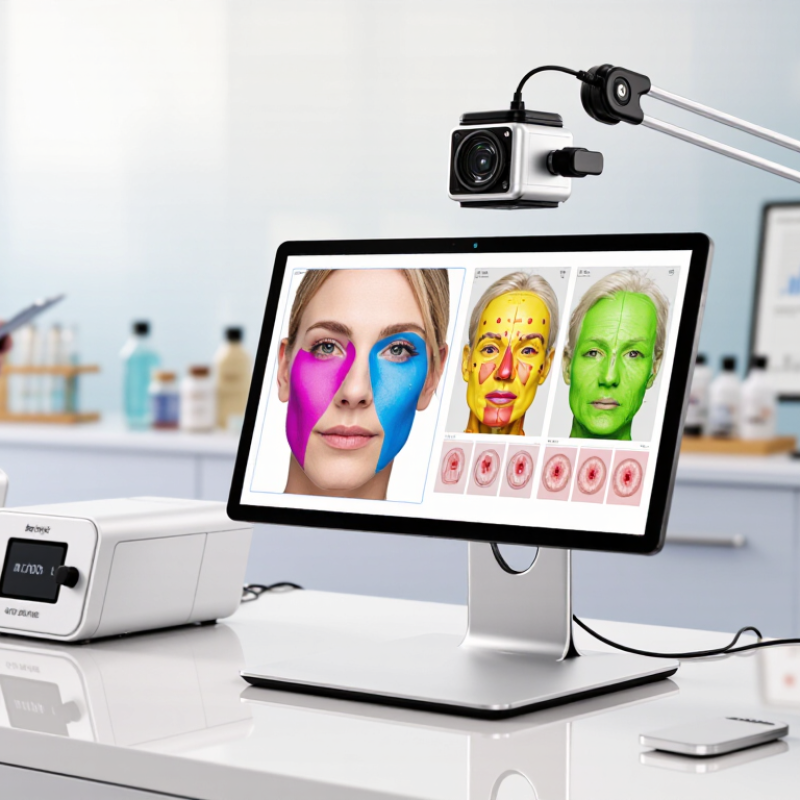
China’s Skin Analysis Machine industry is moving from salon counters into dermatology clinics, beauty chains, and home-care consultations. A camera captures enlarged pores, pigmentation, redness, wrinkles, and moisture patterns within seconds. The result appears on a screen as colored maps, not vague visual impressions.
Market data supports this shift, but definitions remain inconsistent. Grand View Research valued the global skincare devices market at approximately USD 21 billion in 2023, with continued growth projected through 2030. MarketsandMarkets also reports expanding demand for AI-powered diagnostic and imaging technologies across healthcare and aesthetics. These figures are useful indicators, not exact measurements of the Skin Analysis Machine segment. Different reports include different device categories. That distinction matters.
Dermatologist Dr. Zoe Diana Draelos offers a practical warning: “Technology should support, not replace, clinical judgment.” Her point is especially relevant when a machine labels a cheek area as “dehydrated” under bright salon lighting. Camera quality, calibration, skin tone, operator training, and software standards can change the result. Small errors can influence product recommendations and customer trust.
This guide examines China Top 10 Skin Analysis Machine Manufacturers through technical capability, manufacturing experience, software intelligence, certification practices, and after-sales support. It considers whether a supplier can deliver stable readings, clear reports, secure data handling, and usable training. Some manufacturers promote impressive artificial intelligence claims. Evidence is not always equally impressive.
The strongest supplier may not be the cheapest or most automated. It may be the company that explains limitations clearly, tests devices consistently, and helps professionals interpret results responsibly.
Skin Analysis Machines: Definition, Functions, and Main Applications
A skin analysis machine is a digital imaging device that examines visible skin conditions. It usually combines cameras, polarized light, and software-based image analysis. The system may assess moisture, oil, pores, pigmentation, redness, wrinkles, and texture. Some models also estimate hidden damage beneath the surface. These readings help professionals discuss skin concerns with clearer visual evidence.
In daily practice, an operator cleans the face and controls the lighting before scanning. The client usually rests the chin on a support for a steady image. Results can guide cleansing plans, hydration advice, sunscreen education, and follow-up care. Beauty clinics and salons use the machines during consultations. Dermatology practices may use them as supporting records, not as replacements for medical diagnosis. Training matters. Poor positioning can distort the result.
Applications also include product testing, cosmetic research, classroom education, and customer communication. A clinic can compare images after four or eight weeks. This creates a more practical record than memory alone. Still, the technology has limits. Lighting, makeup residue, skin tone, and camera calibration can affect readings. Software may also simplify complex conditions too much. The report is not perfect. Professionals should explain uncertainty, protect personal images, and avoid promising guaranteed results. Careful interpretation remains more valuable than an impressive color map.
Criteria for Evaluating Chinese Skin Analysis Machine Manufacturers
When evaluating Chinese skin analysis machine manufacturers, start with measurable performance, not catalog language. Request lab reports, calibration records, and test images from different skin tones. A reliable supplier should explain camera resolution, lighting control, and algorithm limits in plain English. Ask how often devices need calibration. Numbers can mislead. Compare repeatability: scan the same person three times under identical conditions, then review pores, pigmentation, moisture, and texture readings. A useful system should produce stable results, not dramatic changes caused by room lighting.
Examine compliance and data protection before discussing price. Check applicable electrical safety documents, quality-management records, and software update procedures. Confirm that patient images are encrypted, access is logged, and deletion requests are supported. Ask whether the analysis serves cosmetic consultation or medical decision-making. These uses require different evidence and oversight. Manufacturers should provide validation methods, sample reports, and clear disclaimers. Ask for evidence. Independent testing is stronger than a polished demonstration.
Supplier capability matters after installation. Review factory quality controls, component traceability, warranty terms, repair response times, and replacement-part availability. Request operator training with real cases, including acne, uneven pigmentation, and reflective skin surfaces. A dependable technical team should explain errors rather than hide them. Check references from comparable clinics, but verify them directly. The cheapest quotation may exclude training or software support. That is easy to miss. Score usability too: scan time, language options, report clarity, and cleaning requirements. No evaluation is perfect. Human judgment and inconsistent positioning can still distort results. Record these weaknesses openly, then choose the manufacturer that answers concerns with evidence, not promises.
China’s Skin Analysis Machine Industry and Manufacturing Landscape
China Top 10 Skin Analysis Machine Manufacturers
China’s skin analysis machine industry has developed through strong electronics, optics, and software supply chains. Manufacturers often combine camera modules, controlled lighting, touchscreen systems, and cloud-based reporting. Many factories support private-label production, while others build customized systems for clinics, salons, and training centers. Manufacturing clusters can shorten procurement cycles and reduce tooling costs. They also make component replacement more practical.
The leading manufacturers are not judged by appearance alone. A credible evaluation should examine image consistency, calibration procedures, software stability, and technical support. A reliable device should produce similar results under controlled conditions. It should also explain how lighting, skin tone, and camera distance affect readings. Data protection matters too. Clear user permissions and secure storage should be part of the product design, not an afterthought.
A weakness remains in the market. Some suppliers emphasize attractive screens but provide limited validation evidence. Buyers should request sample reports, test records, warranty terms, and operator training details. Factory audits can reveal small but important issues, such as uneven assembly, unclear labeling, or slow firmware updates. Independent testing is still valuable. No machine should replace professional judgment or direct consultation. Results may vary with hydration, cosmetics, room temperature, and user positioning. Careful manufacturers acknowledge these limits instead of promising perfect accuracy.
Profiles of China’s Top 10 Skin Analysis Machine Manufacturers
China’s top 10 skin analysis machine manufacturers reflect a fast-changing beauty technology sector. Grand View Research reports that the global skincare devices market was worth approximately US$17 billion in 2023, with strong growth expected through 2030. This demand encourages Chinese manufacturers to improve imaging, software, and production consistency.
The leading profiles usually share practical strengths. They develop systems using polarized light, ultraviolet imaging, moisture sensors, and facial mapping. Some focus on compact salon equipment, while others produce larger systems for clinics and training centers. Their factories often combine OEM manufacturing with in-house software teams. Public certifications, patent records, export experience, and after-sales coverage provide useful comparison points. However, certification does not always prove accurate skin analysis.
Real-world testing matters more. A reliable machine should produce stable readings under different lighting conditions. Operators also need clear reports, adjustable image capture, and simple maintenance. Several Chinese manufacturers offer cloud dashboards and artificial intelligence scoring, but algorithm explanations can remain limited. That weakness deserves attention. A polished interface may hide inconsistent data. The best profiles therefore include calibration procedures, software update policies, warranty terms, and independent testing evidence. Market research from Fortune Business Insights also identifies artificial intelligence and connected devices as important growth drivers, yet clinical usefulness still depends on training, data quality, and careful interpretation.
China Top 10 Skin Analysis Machine Manufacturers
Technology Spectrum Reference for Skin Analysis Equipment
This chart compares the optical wavelength ranges commonly used in skin imaging and analysis. UVB, UVA, visible light, and near-infrared measurements support the assessment of pigmentation, redness, texture, vascular features, and subsurface skin conditions. The data describe technology dimensions rather than individual companies or brands.
Product Comparison, Certifications, and Global Market Reach
China Top 10 Skin Analysis Machine Manufacturers
When comparing China’s top ten skin analysis machine manufacturers, examine more than camera resolution. Professional testing should cover lighting consistency, image repeatability, moisture measurement, pore visibility, and software reporting. A practical trial matters. Ask each supplier to scan the same skin area three times. Large result changes may indicate weak calibration or unclear operating procedures. Some systems look advanced but provide limited clinical value.
Certifications require careful checking. Look for ISO 13485 quality management certification when medical-device manufacturing is claimed. CE marking may support European market access, while other regions require separate registration or approval. Verify the certificate holder, product model, issuing body, and validity date. Do not rely on a copied logo. That mistake is common. Manufacturers serving global markets should also provide multilingual software, export documentation, local voltage options, remote training, and responsive technical support. Data protection deserves equal attention, especially when facial images are stored online.
Tips: Request a live demonstration with different skin tones and lighting conditions. Compare reports from several devices, not only promotional screenshots. Check warranty terms, replacement-part availability, and software update policies before purchasing. A lower price can become expensive when support is slow. I would also ask for references from clinics in your target region. However, references can be selective, so treat them as evidence, not proof.